> _
Home improvement retail — flooring
The client approached us with a clear need to bring structure and visibility to their growing operations. Their tools and communication channels were fragmented, resulting in inconsistent project tracking and team coordination.
Emails, SMS, and field updates were stored in separate systems, leading to missed follow-ups and inconsistent project status updates. Manual updates delayed approvals and task transitions. Leadership lacked an accurate, real-time picture of ongoing work. As the installation volume increased, these issues began to affect overall efficiency, which required dedicated custom software development services to resolve the problem.
We chose to focus on bespoke CRM development and developed a strategy centered on consolidating communication, project oversight, and workflow automation through low-code development tools.
CRM software development enabled us to integrate Outlook and Twilio, bringing all messaging into one place and providing teams with a centralized communication history. Automated triggers replaced manual follow-ups. Shared calendars and real-time dashboards improved cross-team coordination and provided real-time operational visibility for the leadership.
PostgreSQL, AWS, Microsoft 365, Twilio, Retool
Overview of the Project and CRM System Development
The project focused on CRM system development for The Design Gallery by Paul Evans, a leading flooring retailer in the Permian Basin. The company is known for its unmatched in-stock inventory, same-week installation services, and the ability to manage a large volume of customer projects simultaneously.
The client’s fast-paced operating model required clear coordination between sales, office staff, and installation teams. To support these operations, our Retool development agency created a unified CRM platform that centralizes communication, organizes project lifecycles, and automates routine actions.
Business Context and the Development of CRM System
Before the project began, the company relied on Outlook, separate SMS tools, and manual spreadsheets to manage daily tasks. Each department worked from its own sources of truth, resulting in inconsistent project data, unclear responsibilities, and frequent delays. These limitations necessitated the development of a CRM system.
To address the core operational gaps, the new platform needed to become a single hub that provided:
- full visibility into every project phase, from measurement to installation;
- centralized communication for email, SMS, and field updates;
- accurate logging of client interactions and team activity;
- a simple interface suitable for non-technical staff handling high-volume work.
Approach to Bespoke CRM Development
Krasty Soft approached the project as a bespoke CRM development initiative, starting with a detailed audit of the retailer’s processes. We analyzed how tasks were distributed among sales, office staff, and installation crews, which enabled us to design modules that aligned with operational workflows. Communication touchpoints — emails, SMS notifications, approvals, and scheduling — were mapped and connected into a single system.
To accelerate delivery and maintain flexibility, we used Retool as the interface layer, making the platform suitable for low-code development while preserving custom logic. Acting as a Retool development agency, Krasty Soft built tailored dashboards, forms, and communication components that could scale across teams. This low-code foundation allowed the client to modify or extend modules without rebuilding the system.
Turnkey CRM System Development and Core Features
The solution was delivered as a full turnkey CRM system development project that consolidated all operational steps, from lead intake to installation, into a single platform. This eliminated scattered tools, standardized workflows, and ensured that every team worked with real-time project information. Built as a central operational hub, the system was developed in phased iterations to support the company’s entire service lifecycle.
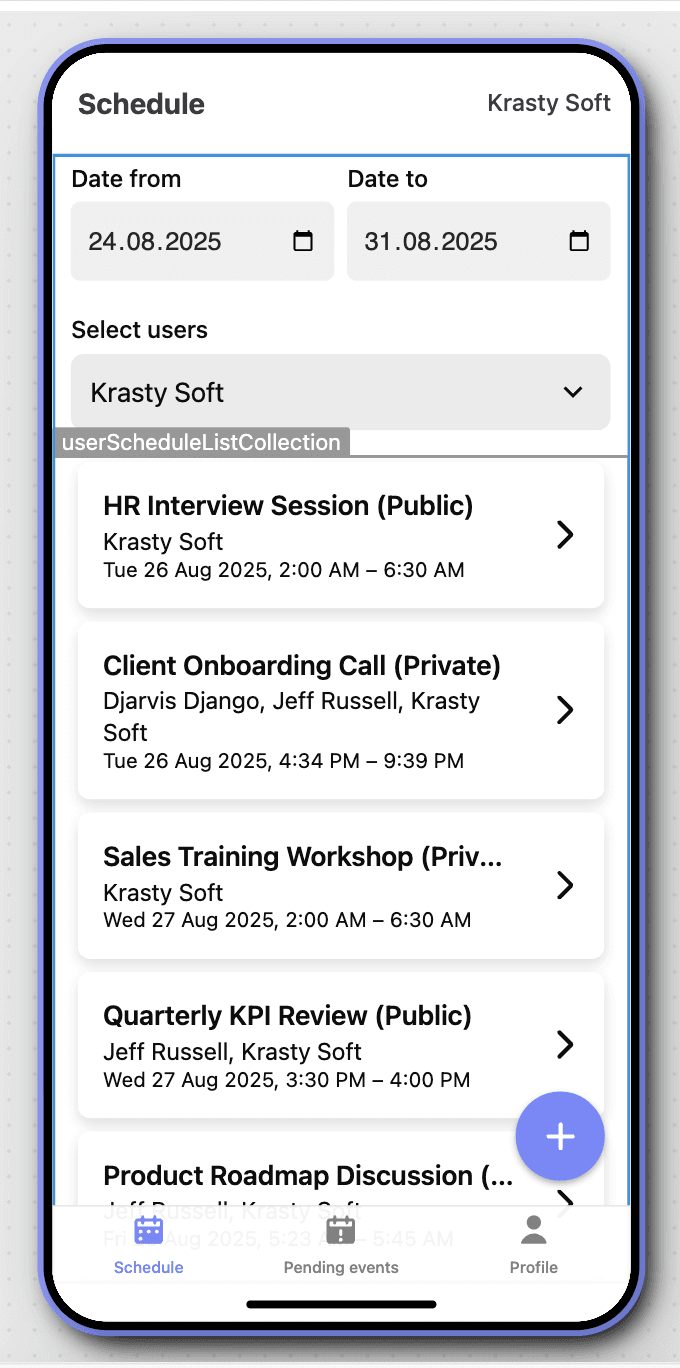
A key element of the CRM software development process was unifying communication and automating routine actions to prevent information loss and delays. Emails synchronized with Outlook were automatically linked to the right project, while Twilio enabled sending and receiving SMS directly within the CRM. Calendar sync ensured accurate appointment and installation scheduling across web and mobile.
Core Features
Built together with our capabilities as a Retool development agency, the CRM platform included the following core features:
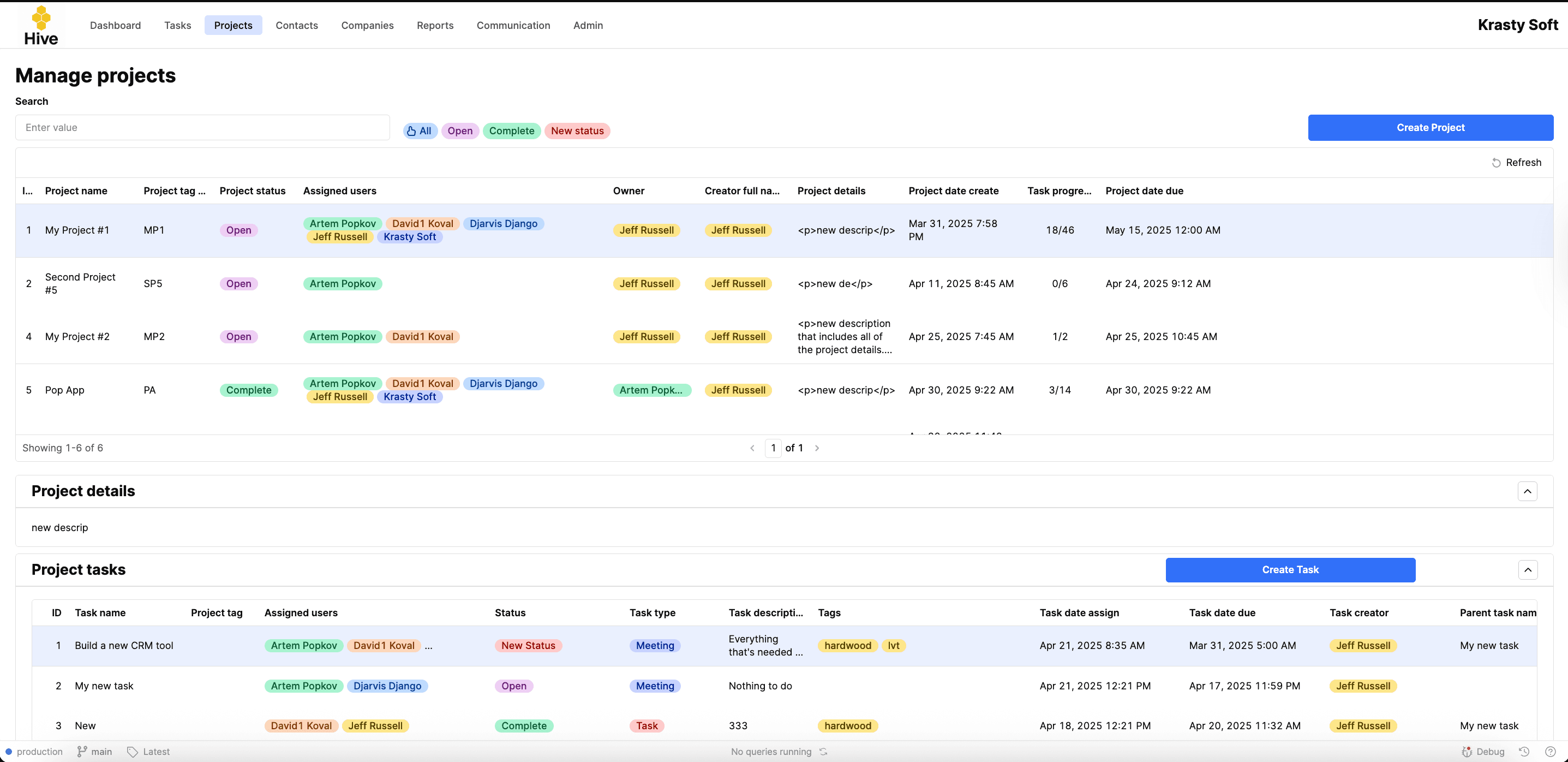
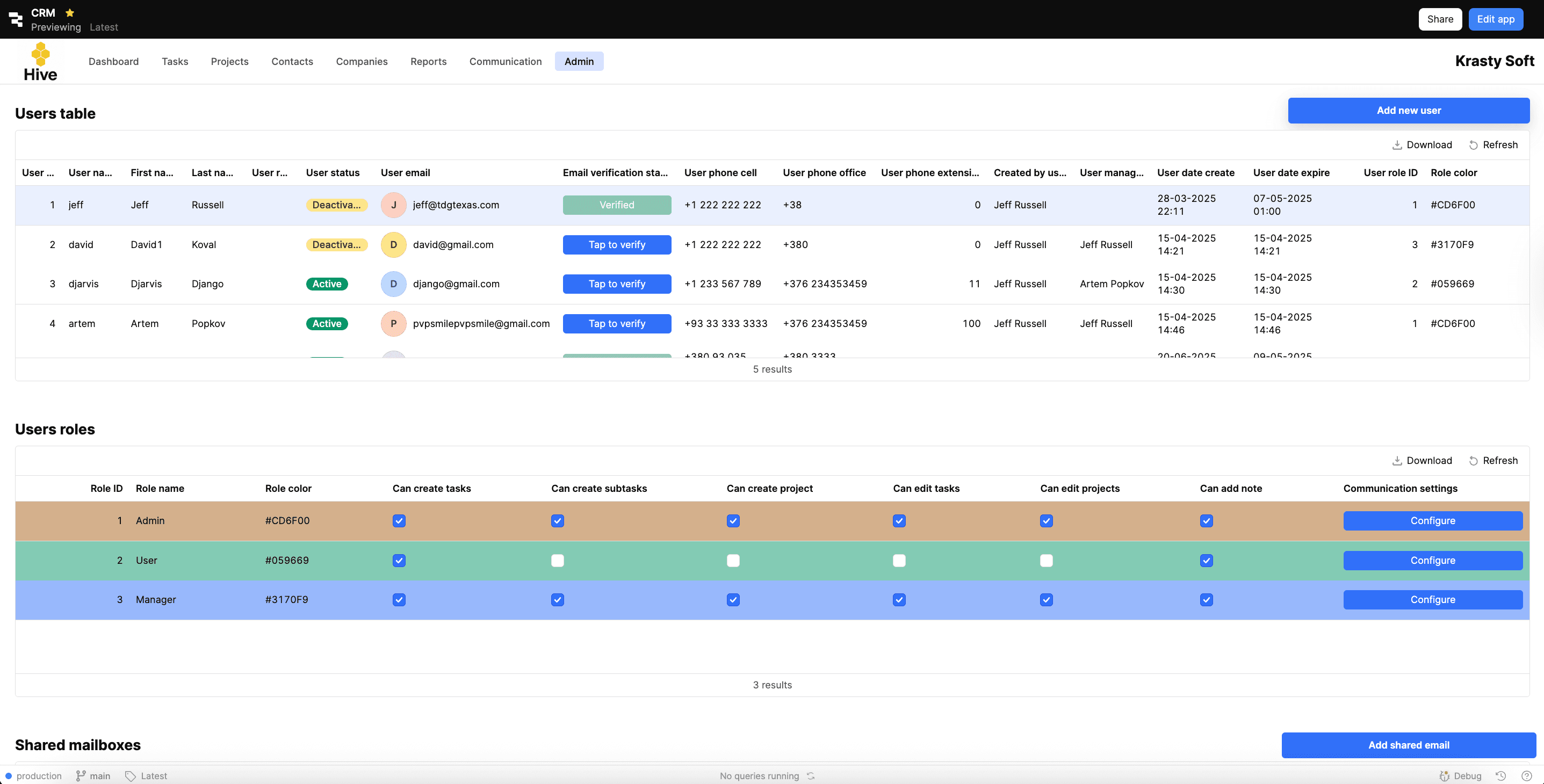
- Centralized project, client, and account management;
- Unified inbox for Outlook emails and Twilio SMS;
- Automated workflow triggers for status changes and follow-ups;
- Real-time calendars with two-way Outlook synchronization;
- Full logging of team and client communication;
- Mobile access for installation crews and field teams.
Outcomes and Operational Impact of CRM System Development
The new CRM system development enabled us to improve operational throughput and reduce delays across the company’s service pipeline. Status transitions, approvals, and cross-team coordination became faster and far more predictable, giving leadership a stable and scalable workflow foundation.
Key results:
- Noticeable reduction in status-transition delays and follow-up gaps;
- Significant decrease in administrative workload for office staff;
- Faster approval cycles and fewer bottlenecks in daily task routing;
- A high percentage of routine actions became automated instead of being handled manually;
- Improved accuracy in scheduling and fewer missed updates;
- More reliable handoffs between sales, office, and installation teams.
Overall, the project demonstrated how turnkey CRM system development can simplify operational workflows by centralizing project data and lowering administrative load.